On October 17, the final of the 2026 Innovate Together Competition (ITC), hosted by the Department of Industrial Engineering, was held at Tsinghua University. Ten finalist teams from universities in China and Europe took the United Nations Sustainable Development Goals (SDGs) as their guide, targeting real-world engineering challenges in industrial operations and maintenance, healthcare, and energy and transportation, and presented the results of their innovative projects.
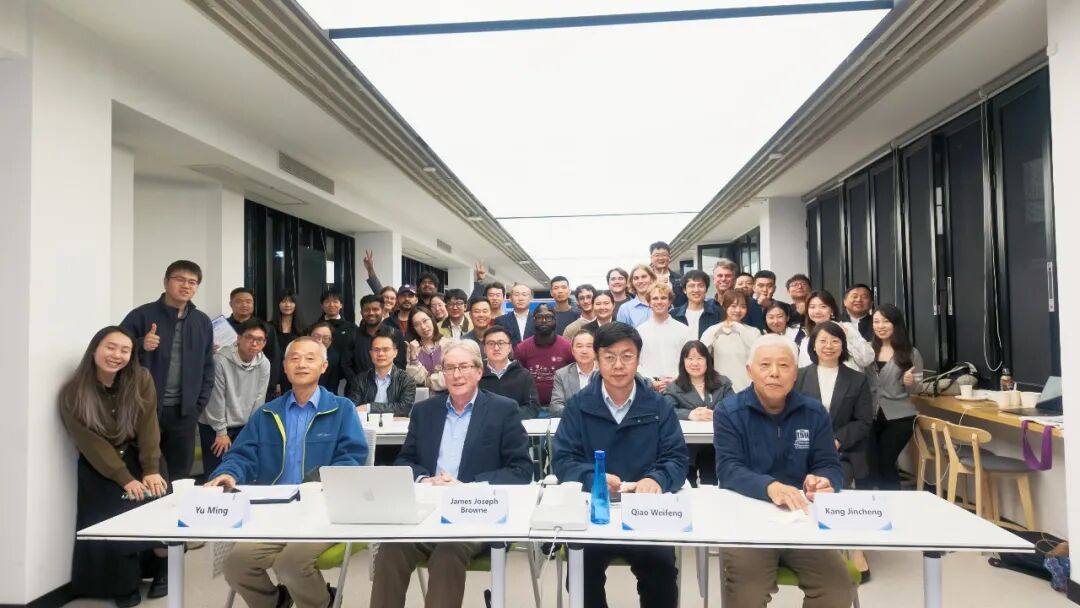
Group photo at the ITC final
The Innovate Together Competition (ITC) is an international, interdisciplinary engineering innovation competition. Under the guidance of the International Centre for Engineering Education (ICEE) under the auspices of UNESCO, it was jointly initiated by Tsinghua University together with Shanghai Jiao Tong University, RWTH Aachen University in Germany, the University of Galway in Ireland, Erasmus University Rotterdam in the Netherlands and other Chinese and European universities. Open to graduate students and upper-year undergraduates, the competition encourages participants to base themselves on the SDGs and propose innovative solutions to real-world engineering problems. The competition operates on a China–Europe alternating host mechanism, with winning teams advancing to the in-person global final.
The preliminary round of this year's competition was held on May 6 at Rotterdam School of Management, Erasmus University (RSM) in the Netherlands, with 19 teams from more than 20 countries and regions participating. In the end, 10 teams advanced to this final at Tsinghua University.
During the final, James Browne, Professor Emeritus and former President of the University of Galway in Ireland, and Weifeng Qiao, Assistant Secretary-General of ICEE and Associate Research Fellow at the Institute of Education of Tsinghua University, delivered speeches one after another, expressing their hope that Chinese and European universities would use the competition to strengthen academic exchange and collaborative innovation.
Subsequently, the participating teams, in light of application scenarios, technical solutions and actual needs, presented the innovative ideas and implementation feasibility of their projects, showcased prototypes and validation results, and took questions from the judges.
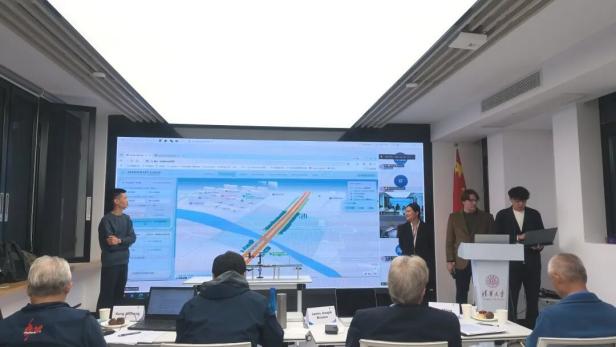
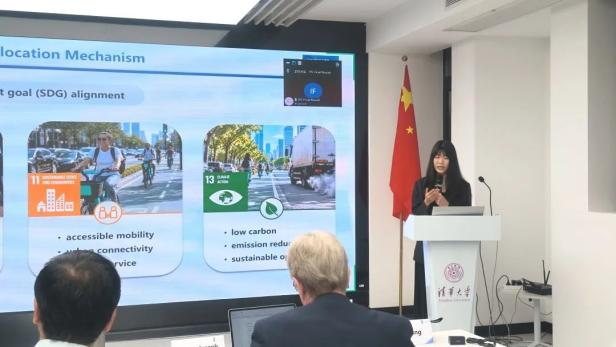
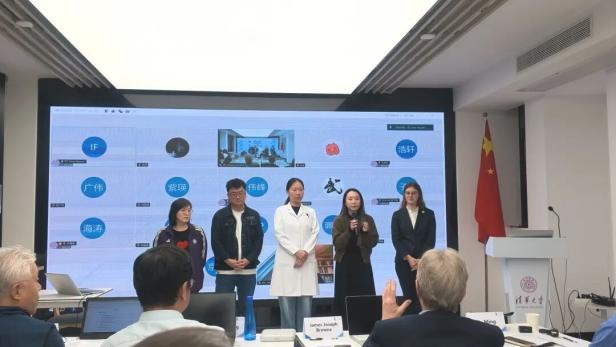
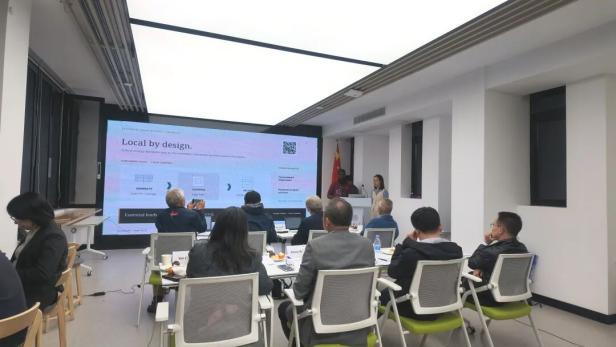
Final team project presentations (swipe left or right to view more)
Upon review, the project “Smart Steel: Digital Intelligence Empowering Equipment O&M” by Team SJTU03 won the first prize.
The projects “SilverLink AI” by Team THU14 and “Racing Against Time” by Team THU13 won the second prize.
The projects “Low-Altitude Intelligent Inspection” by Team THU07, “SolarStart Microgrid” by Team THU12 and “A Data-Driven Incentive Mechanism for User-Based Relocation in Shared E-Bike Systems” by Team SJTU01 won the third prize.
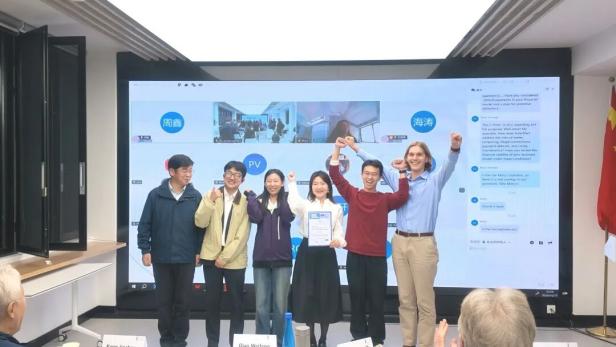
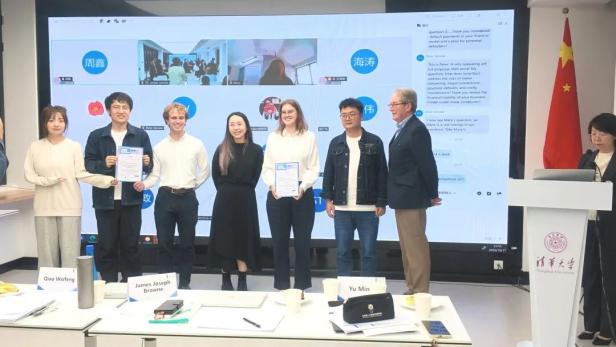
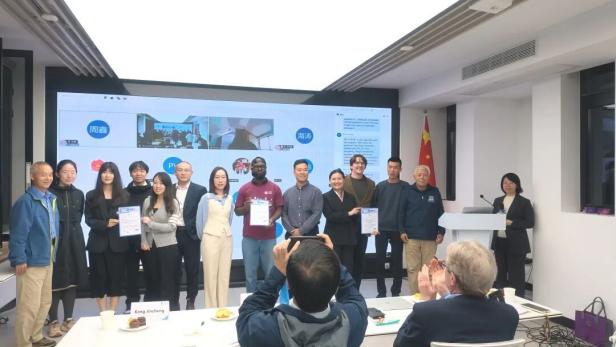
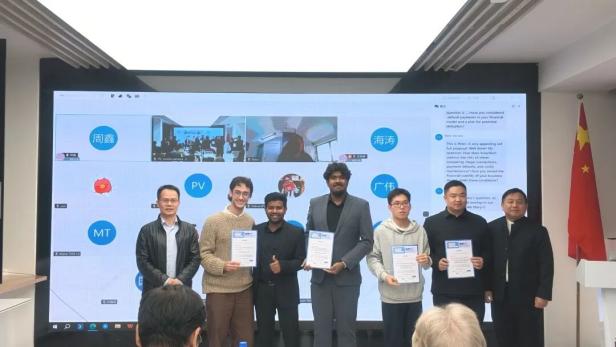
Award ceremony (swipe left or right to view more)
The first-prize project “Smart Steel: Digital Intelligence Empowering Equipment O&M” was completed by a joint team of students from Tsinghua University, Shanghai Jiao Tong University and Erasmus University Rotterdam in the Netherlands, with members including full-time and part-time graduate students and covering multidisciplinary backgrounds in engineering, business, information management and others. Aimed at steel production scenarios and addressing the problem of production line shutdowns caused by component failures, the project integrates sensor-collected data with AI agents to achieve early warning of equipment wear and provide decision support for maintenance personnel in scheduling inspections and repairs.
Han Liu, a first-prize team member and a student at Tsinghua University, said that from remote collaboration to the in-person roadshow, members from different universities built mutual trust through sustained collaboration and fully leveraged their respective professional strengths within the framework of sustainable development. Yi Yuan, a student at Shanghai Jiao Tong University, said that after half a year of preparation, the team gradually adapted to a collaborative rhythm spanning different locations and time zones and turned its diverse disciplinary backgrounds into the project's competitive edge. Henri Lemmen, a student at RSM, Erasmus University Rotterdam in the Netherlands, said that the project deepened his understanding of industrial production processes and also directly demonstrated the application potential of artificial intelligence in industrial scenarios. Cross-regional and interdisciplinary collaborative integration provided strong support for the continuous iteration of the solution.
Cross-cultural collaboration was an important gain commonly mentioned by the participating students. Felicia Erb, a member of Team THU14 and a student at RWTH Aachen University in Germany, said that working with her Tsinghua teammates over a long period accustomed her to a cross-language and differentiated working style. From months of online collaboration to gathering at Tsinghua University to compete in person, this face-to-face exchange was a particularly valuable experience in the competition and also built a platform for teams to exchange and learn from one another.
Eric Verbrugge, a member of Team THU13 and a student at RSM, Erasmus University Rotterdam in the Netherlands, said that taking part in a project in the healthcare track helped him, with his information technology background, broaden his research horizons and better understand the actual business needs of the healthcare sector. From the preliminary round in Rotterdam to the final at Tsinghua University, sustained collaboration and face-to-face communication further consolidated the team's bonds of cooperation.
After the competition, Ming Yu, Associate Professor in the Department of Industrial Engineering of Tsinghua University, delivered a closing speech, reviewing the overall situation of this year's competition.
During the final, the Department of Industrial Engineering of Tsinghua University also organized exchange activities such as industry visits to help international participating students gain a close-up understanding of technological innovation and industrial practice in China. Several participating students reported that the field visits gave them a more concrete understanding of innovation at Chinese enterprises and also added industry cases to their coursework and project research.
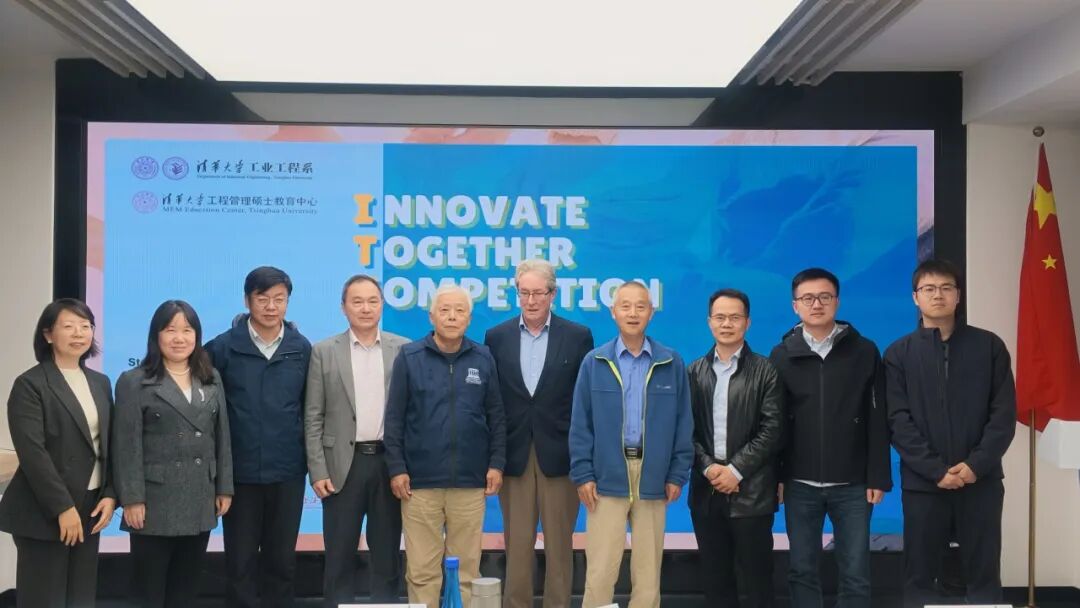
Group photo of the review experts and the competition organizing committee
This year's competition built a platform for transnational collaborative innovation for students from Chinese and European universities. Through multinational teaming for engineering practice, the competition guides students to enhance their capabilities in engineering practice, cross-cultural communication and collaborative innovation throughout the whole process of solution design, results presentation and project refinement. The cooperative connections established during the competition also lay a foundation for the parties' subsequent academic exchanges and joint research.
Source | Organizing Committee of the Innovate Together Competition
Editor | Zixin Wang
Reviewer | Lefei Li




 Intranet
 中
 Search